Done with the old-fashioned catalog home?
Quite the opposite.
The catalog home is making a quiet comeback. And contrary to what you might think, that is not nostalgia but exactly what this moment needs.
We have been live in the Netherlands and Belgium for just a few weeks, and already we hear it from several providers: "We want to shed the image of the catalog builder." Understandable: the word sounds dusty, off-the-shelf, old-fashioned. But that is the wrong instinct. Because exactly what the sector rejects is what a growing group of buyers is looking for.
A proud history
The idea is older than you think. Between 1908 and 1940, you could order a complete house from Sears in America, straight from a catalog: you chose from hundreds of designs, and weeks later your home arrived by rail, in tens of thousands of numbered parts with an instruction book. Some seventy thousand houses went out the door; many still stand and are still lived in. Not a cheap stopgap, but solid, architect-drawn houses with a clear design and a fixed price. You knew what you were getting, what it cost, and how it would look.
You can see for yourself what that looked like: we have made an original 1925 Sears catalog browsable on the platform. The full story, from the mail-order house to today, is in our brief history of catalog homes.
Why now
A century later, that idea is back, modernized. Prefab and modular construction are surging, faster and more consistent than ever, and that lifts the whole category with it. Three things make this modern catalog home possible. Design has been decoupled from construction: one good design can be built again, in multiple markets, with the quality unchanged. Customizing is no longer expensive bespoke work: with a configurator you choose your facade, materials and layout within a considered framework, and see the price instantly. And the information gap is gone: you compare prices, assess designs, ask for performance figures.
Together those three open a third route: between expensive, exclusive bespoke work and anonymous new-build. Exactly the route this moment calls for: affordable, faster, more sustainable, without compromising on design. A pre-designed home also compresses the entire process, including the part before the first spade goes into the ground, where bespoke work loses the most time.
Scale was never the problem. Scale that came loose from care was: mass building that stopped asking what people truly need. The catalog home brings scale and care back together.
The image and the opportunity
Notice who is running away: not the newcomers. The tiny houses, the modular architect-designed homes, the fresh designs on Pinterest wear "pre-designed" with pride. It is mainly the classic catalog builders who most loudly insist they are not catalog builders, while they often come closest to the stereotype.
And "we are not a catalog builder" is not a positioning. You do not set yourself apart by what you are not: a negation is not a category, and no buyer goes looking for what something isn't. Whoever only pushes back against the stereotype loses exactly the buyers who do deliberately want a pre-designed home.
The stigma lives mainly in the sector. With the buyer it need not win: for anyone looking for a proven design, clear choices and a fixed price, "pre-designed" is not an insult but precisely the reassurance they came for.
There lies the opportunity: not to deny the category, but to claim it with pride. Those who do so now reach a growing group of buyers looking for exactly this.
What we are building
That is what we are building with Cataloghomes.com: a place where pre-designed homes come together in the modern way. Holiday homes, tiny homes and full-fledged houses stand side by side, selectable, comparable and configurable. Because a catalog home is not valuable because it is standard, but because the design is worth repeating.
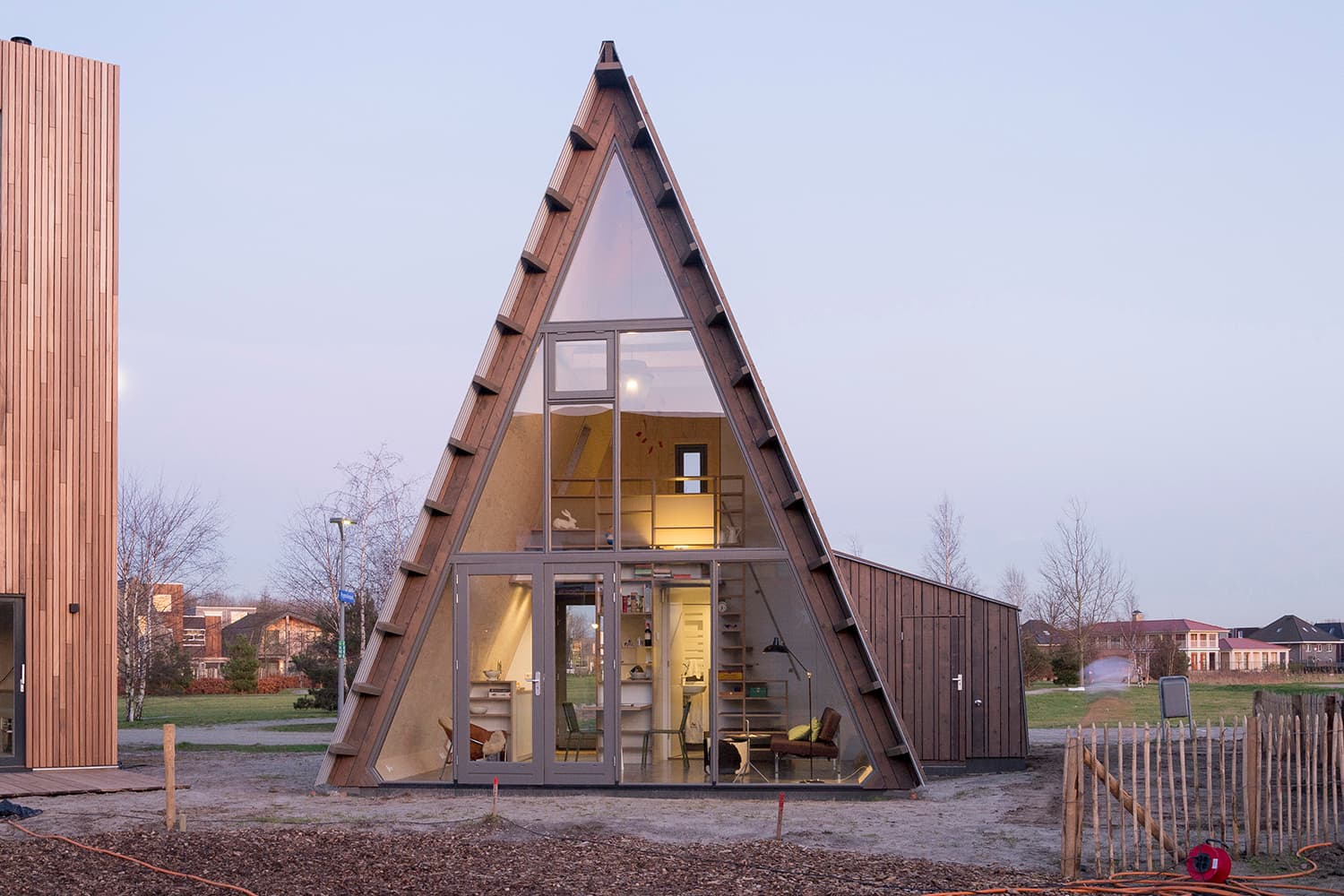
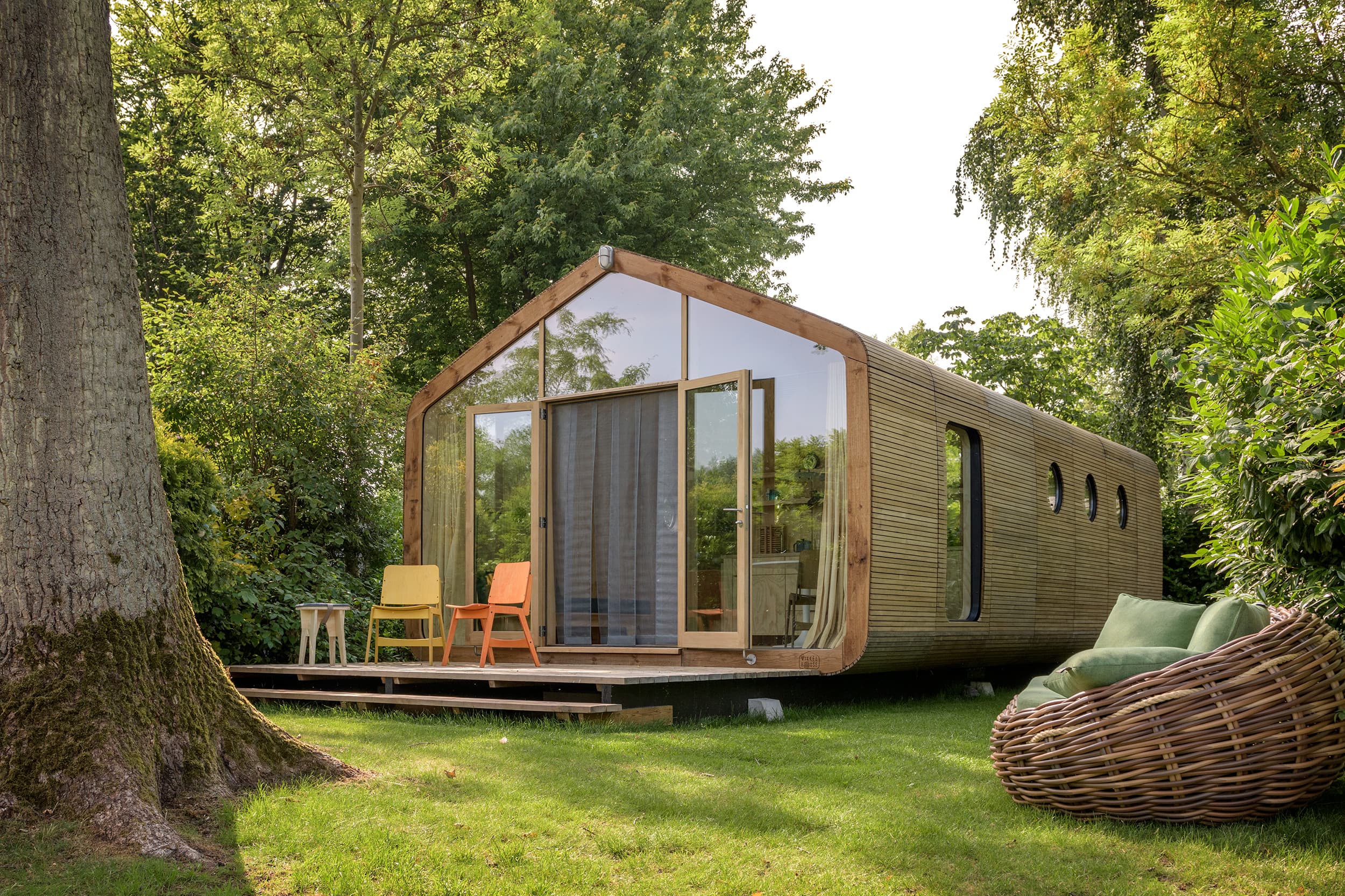

And it is the conversation we hold week after week: on our LinkedIn page we are building the case, in 52 arguments, that pre-designed homes are the answer to the housing question of our time. One a week, for a year.
The catalog home does not deserve a new meaning because the old one was wrong. It deserves one because its time — once again — has come.
Or go straight to: Everyday living · Flexible living